Procurement
How to specify a school uniform that survives the year
Most uniform complaints are not tailoring failures. They are specification failures, decided months earlier in a meeting that lasted twenty minutes.
· 6 min read · Modish Formals
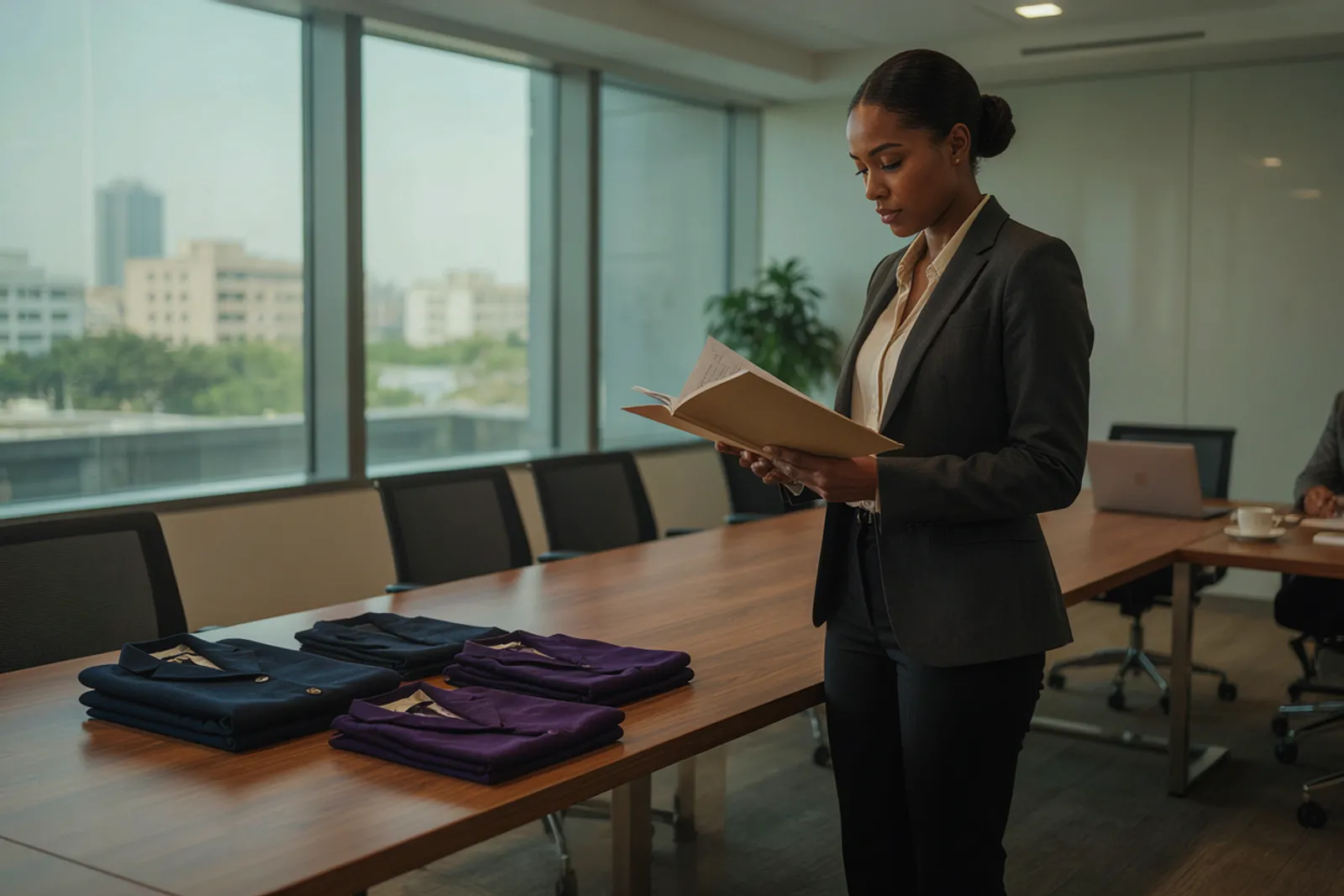
By the third term, you can tell which schools wrote a real specification. The pinafores still hang straight. The crests have not curled. The navy is still navy, not the grey-blue that cheap dye turns after thirty washes in hard water. None of that is luck, and almost none of it is sewing. It is decided long before anyone threads a machine.
We produce for schools across Nigeria, and the complaints that reach us in February are almost always traceable to a line that was never written in October. Here is what we ask every school to decide before we quote.
1. Name the fabric weight, not the fabric
A purchase order that says "cotton twill" has specified almost nothing. Twill is a weave, not a weight, and the difference between 160gsm and 200gsm is the difference between a shirt that lasts one year and one that lasts three.
- Day shirts and blouses: 140–165gsm. Light enough for Nigerian heat, heavy enough not to go transparent.
- Pinafores, skirts and trousers: 180–220gsm. This is where schools under-spend most often.
- Blazers: 240gsm and up, with a stated lining.
Write the number. A supplier who cannot hold a stated gsm will tell you so at quoting stage, which is exactly when you want to find out.
2. Fix the colour to a reference, not a word
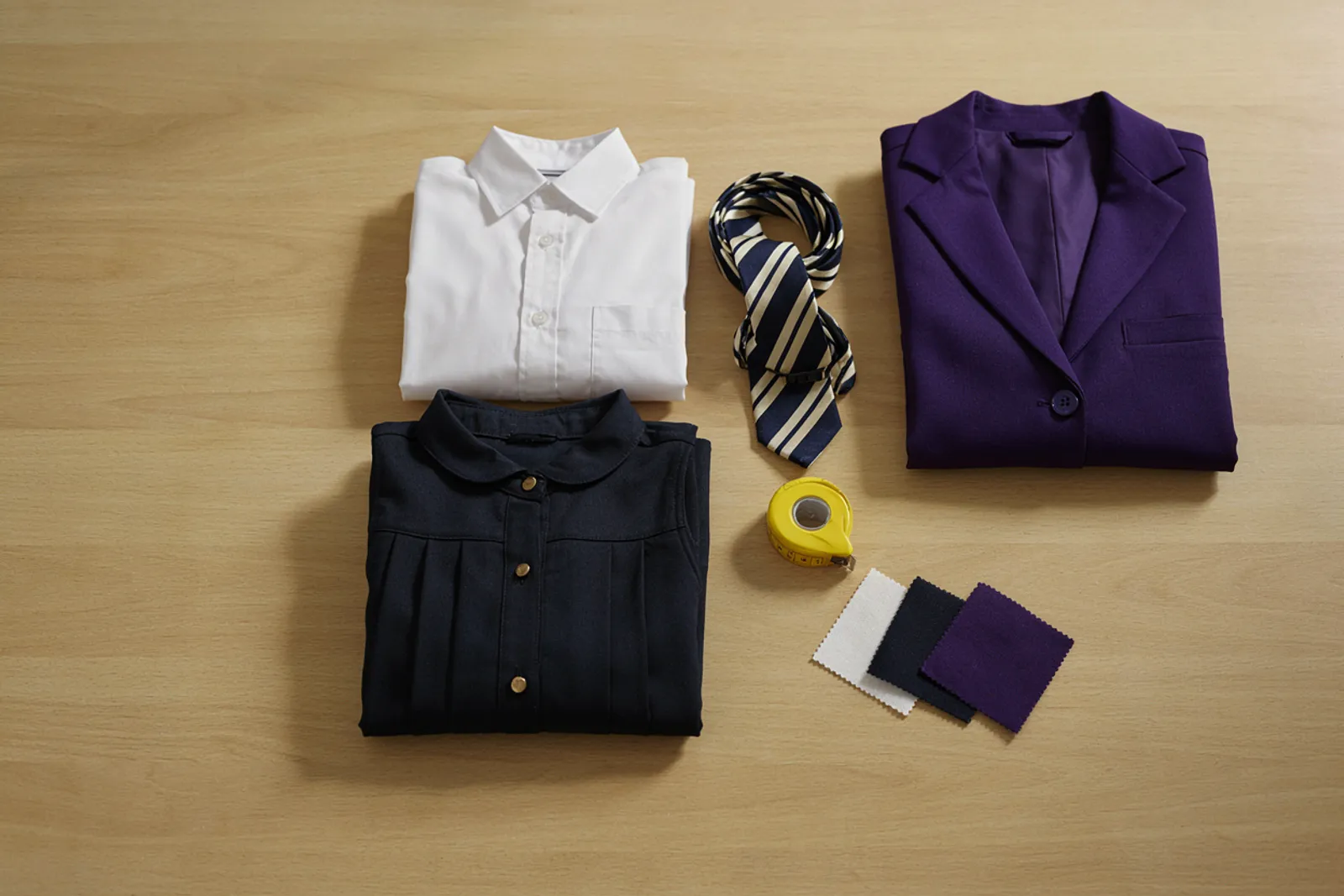
"School navy" means one thing to your board and another to every dye house in the country. Fix it to a physical reference: a Pantone number, or better, an approved swatch that both sides sign and keep. We hold a sealed swatch for every school we produce for, and we dye against that swatch, not against a description.
If the colour is not written down somewhere you can hold in your hand, you have not specified a colour. You have expressed a preference.
3. Decide the crest method early
Embroidery, woven badge, or heat transfer: each has a different cost, a different lifespan and a different lead time. Heat transfer is cheapest and will not survive a term of real laundry. Woven badges sit flatter and cost less than embroidery at volume. Direct embroidery lasts longest and takes the most setup time.
The decision matters at quoting stage because it changes the production sequence. Changing it after sign-off is the single most common cause of a slipped delivery date.
4. Build the size curve from your own roll
Standard size curves are a starting point, not an answer. A school with a large JSS intake needs a different distribution from one weighted to senior classes. We ask for your actual enrolment by class and build the run from it. The alternative is a store room full of unsold size 14 and a scramble for size 8 in week two.
5. Approve a sewn sample before bulk
One unit, cut and sewn to the signed specification, in your hands, before anything is spread. It costs a few days and it is the only point at which a mistake is cheap. We do not cut bulk without it, and you should not accept a supplier who offers to.
What this looks like in practice
A complete school specification fits on two pages: fabric and weight per garment, colour reference, crest method and placement, size curve from enrolment, and the delivery date you need it by. Give a manufacturer those five things and you will get a real quote with a real timeline.
Give them “school uniforms, about 400” and you will get a number that means nothing, from someone who is guessing.